Male and female athletes with limb loss or deficiency, paraplegia or cerebral palsy are eligible to compete.
Individual and team events (with three fencers to a team), including:
• foil
• épée
• sabre (male athletes only)


Male and female athletes with limb loss or deficiency, paraplegia or cerebral palsy are eligible to compete.
Individual and team events (with three fencers to a team), including:
• foil
• épée
• sabre (male athletes only)
Wheelchair fencing is open to athletes with a physical impairment. Athletes are required to submit medical reports and meet the minimum impairment criteria in order to compete. Eligibility is determined by trained Classifiers.
For more information on Eligible Impairments and Classification please see the Wheelchair fencing Information Sheet (PDF – 102KB) – updated August 2024.
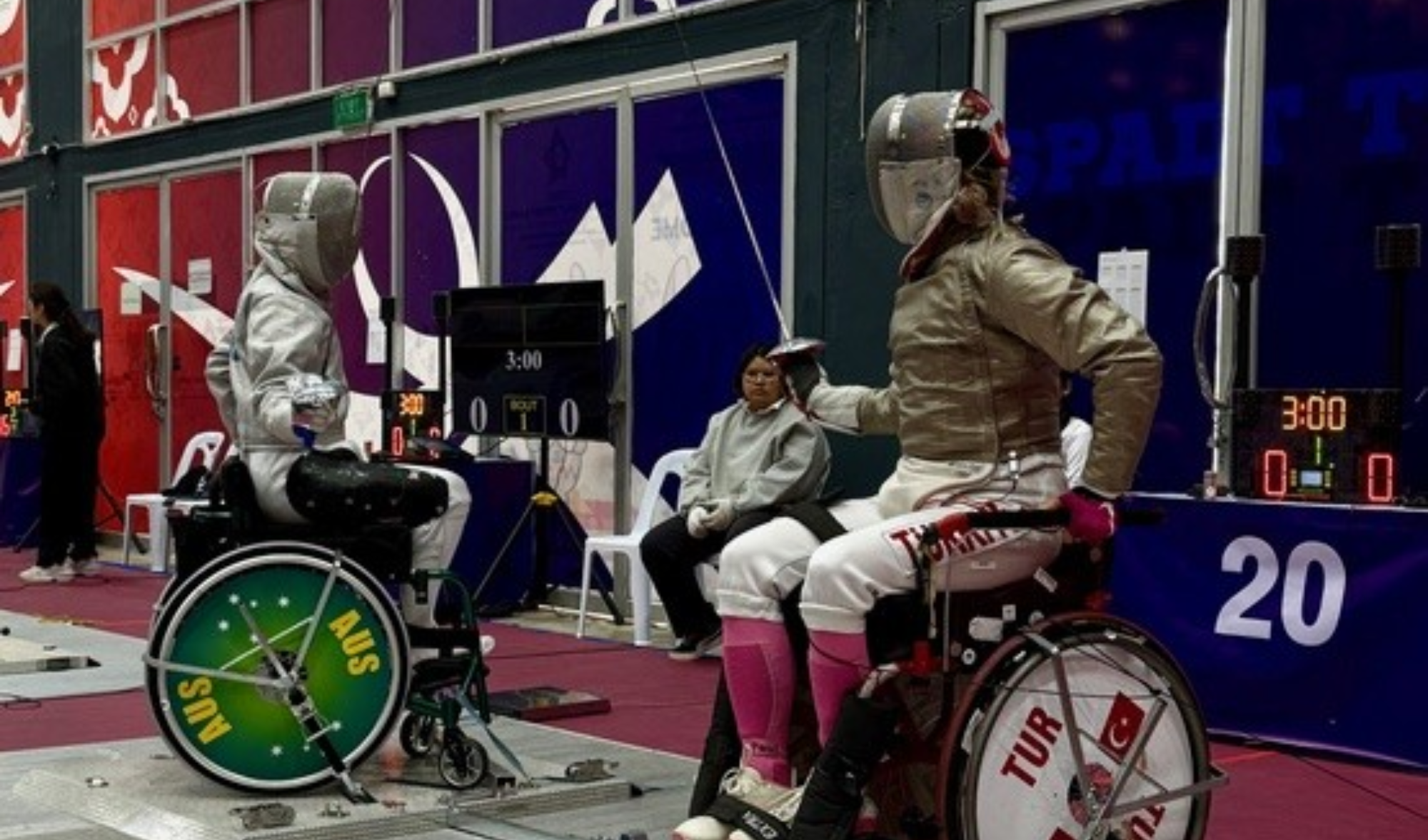
The wheelchair is a primary piece of equipment. It is fixed to a metal frame in the competition area to maintain stability. The inside rear wheel should be covered by metal, detachable shields. The chair may be cushioned.
Fencers who have a significant loss of grip or control of the sword are allowed to attach the sword to their hand using a bandage or similar type of wrapping. A glove may be worn and binding should cover the sleeve opening. Legs must also be well protected by extra thick clothes or an apron.
Athletes compete with the same equipment as able-bodied fencers. Weapons include the foil, épée and sabre.
More information can be found via:
Wheelchair fencing was one of the foundation sports at the first Paralympic Games in Rome, 1960.
Wheelchair fencing is open to athletes with a physical impairment. Athletes competing in individual and team events, including foil, épée and sabre.
Athletes compete in wheelchairs that are fastened to the floor. Chairs allow the fencers freedom of movement and the activity is as fast-paced as in fencing competitions for athletes without impairments.
For more information on Wheelchair fencing Eligibility and How to Get Involved please see the Wheelchair fencing Information Sheet (PDF – 102KB) – updated August 2024.
| Games | Total | |||
|---|---|---|---|---|
| RIO DE JANEIRO 2016 | 0 | 0 | 0 | 0 |
| LONDON 2012 | 0 | 0 | 0 | 0 |
| BEIJING 2008 | 0 | 0 | 0 | 0 |
| ATHENS 2004 | 0 | 0 | 0 | 0 |
| SYDNEY 2000 | 0 | 0 | 0 | 0 |
| ATLANTA 1996 | 0 | 0 | 0 | 0 |
| BARCELONA - MADRID 1992 | 0 | 0 | 0 | 0 |
| SEOUL 1988 | 0 | 0 | 0 | 0 |
| NEW YORK & STOKE MANDEVILLE 1984 | 0 | 0 | 0 | 0 |
| ARNHEM 1980 | 0 | 0 | 0 | 0 |
| TORONTO 1976 | 0 | 0 | 0 | 0 |
| HEIDELBERG 1972 | 0 | 0 | 0 | 0 |
| TEL AVIV 1968 | 0 | 0 | 0 | 0 |
| TOKYO 1964 | 0 | 1 | 1 | 2 |
| ROME 1960 | 0 | 0 | 0 | 0 |


"*" indicates required fields


