SUPPORT OUR PARA ATHLETES IN GLASGOW
Buy Your Green and Gold Seat


The enormous roar that greeted Australian athletes as they entered the stadium for the Opening Ceremony of the Sydney Paralympics meant more to Paul Bird than perhaps anyone else.
Bird was Chef de Mission of the Australian team, a post he held also for the 2004 Games. He’d been Deputy Chef de Mission in 1992 and 1996 and was again in 2008.
Back in 1988, he’d been a section manager after having competed at Arnhem in 1980, where he won a swimming gold medal. In New York in 1984, he added another gold and silver to his ledger.
Across all those years Bird experienced an array of Paralympic ups and downs. But, of all the injustices and inefficiencies he’d encountered, none seemed as wrong as the earliest.
At the 1980 Games, Bird was part of the amputee section – which was separate from the wheelchair section, which was separate from athletes with vision impairment, which was separate from the cerebral palsy section.
“We flew to Holland as ‘a team’ but I didn’t know anyone else in the team,” Bird said.
“When we arrived, we were housed separately. Our amputee group was in a building by ourselves; we were looked after by our manager and a coach and that was it. We never really joined the other athletes.
“The really terrible thing was that we weren’t included in the Opening Ceremony because the only athletes allowed to march were those in wheelchairs. We were a divided group of athletes pulled together by disability, not by sport.”
A similar dynamic existed in 1984 when athletes with spinal cord injuries competed at Stoke Mandeville in the UK and athletes with other impairments competed in New York.
Bird later became involved in management, but only for the amputee group. For Seoul, Barcelona and Atlanta, there were four section managers for each Games, each representing a disability, rather than the team as a whole.
Even at Paralympics Australia Board level, Bird’s role was confined to representing amputee athletes.
Things needed to change, he believed, and the way to do it was to bring sports in as members.
“Rather than just wheelchair sport or amputee sport or blind sport or cerebral palsy sport, the goal was to bring together ‘one team’ – we are one team and we have one culture.
“We started putting that in place in the three years before Sydney. We did it with a range of educational opportunities and groupings together of managers, coaches, section managers and others. We wanted to make it about sport, not about what kind of disability an athlete had.
“As we worked towards it, it began to rearrange the way the athletes saw themselves – you are an athlete first, not someone with a disability. Let’s have you be judged as an athlete.
“It transformed things at other levels, too, in that it put sport at the forefront of decision making, rather than things being dictated by particular impairments.
“The result put us on track to be where we are now, with Para-sport firmly situated in the Australian psyche.”

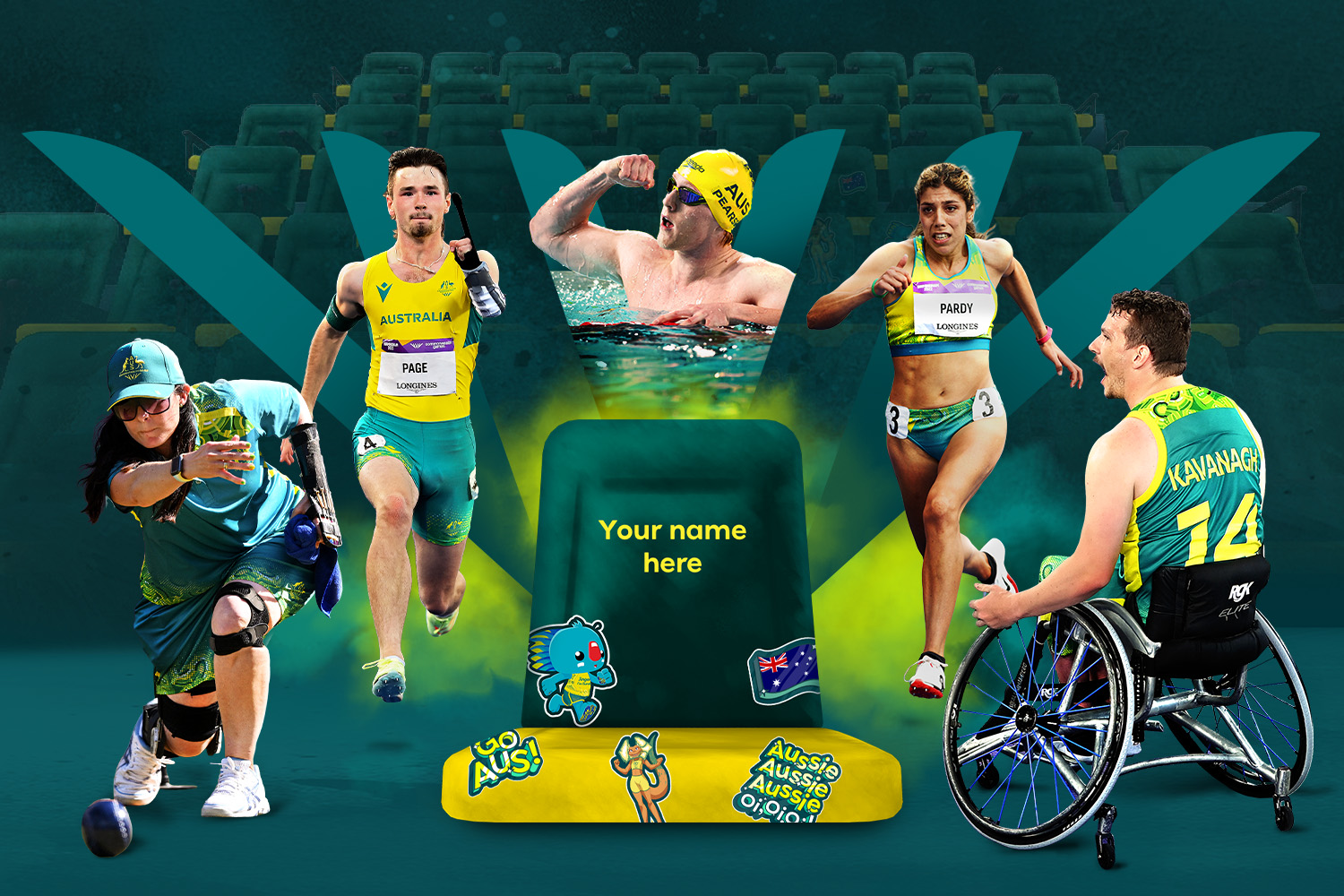
Buy Your Green and Gold Seat

"*" indicates required fields


